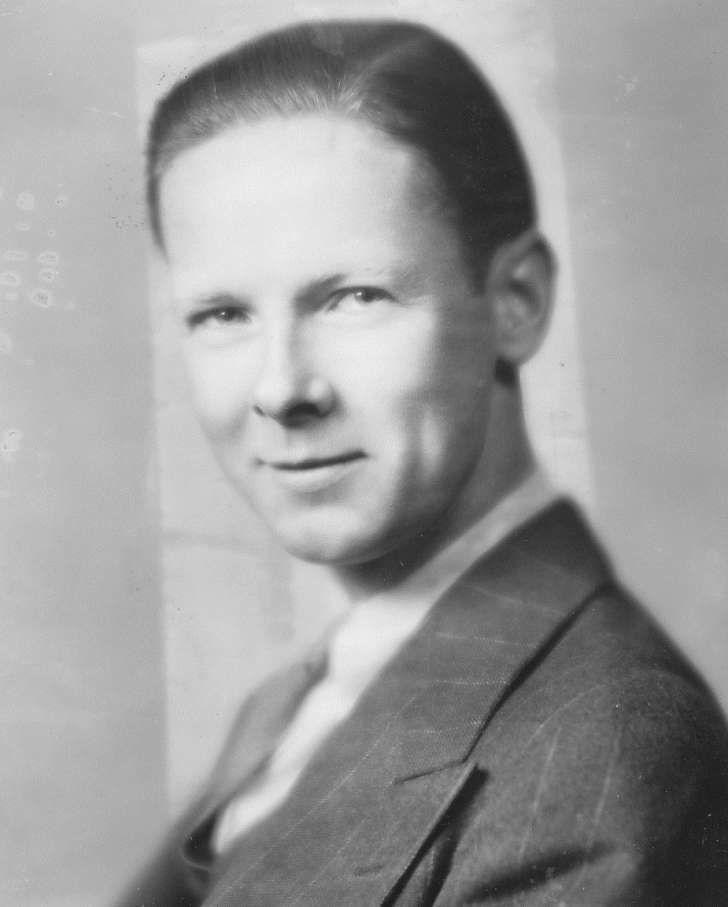
Cave Conditions and Floyd’s Experience

Floyd had been working on “Sand Cave” for nearly three weeks, digging through loose rocks and debris to reach limestone underneath. Four days before his last descent into the passageway, he had set off some dynamite to clear some of the rubble. He had taken off his wool coat and left it at the top, making it easier for him to squeeze through incredibly tight passageways.

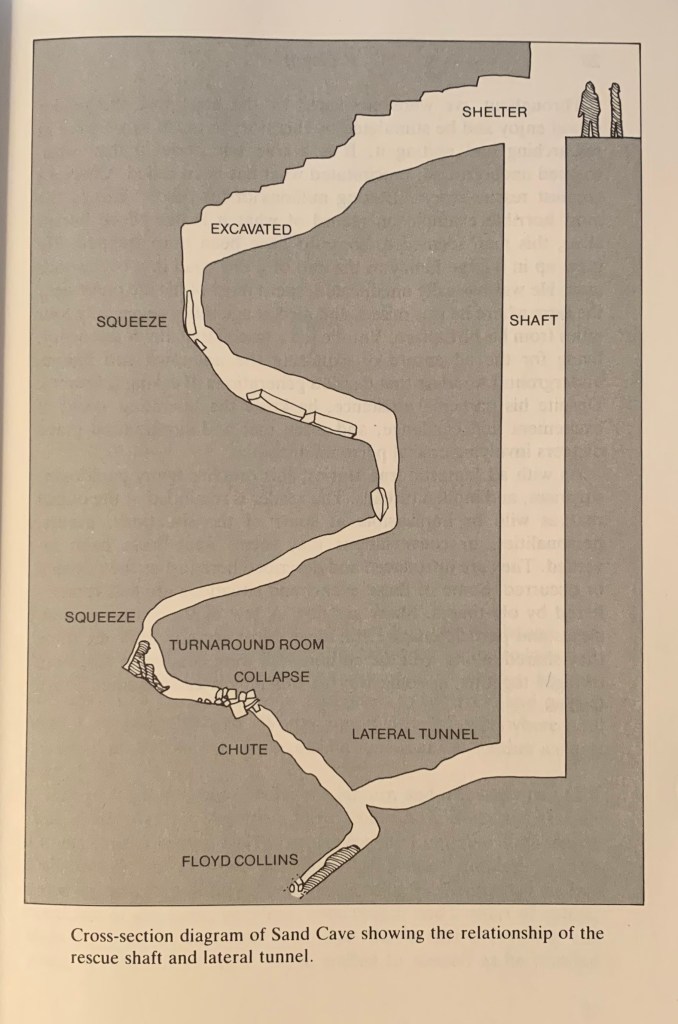
Working through a new passageway cleared by the dynamite, Floyd reached a pit before his lantern began to flicker. Knowing he could explore further later, he started to work back up. In the crevice, he pushed his lantern ahead of him and it fell over and went out. In full darkness, he turned on to his back and inched through by wiggling his hips and digging his feet into the sides. He unlodged a rock that landed on his left ankle, pinning him in the passageway with this arms trapped at his sides. Clawing at the gravel around him only packed him in deeper and water began to trickle on to his face.
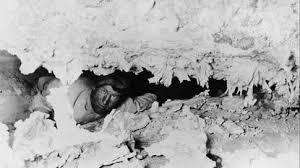
As rescuers soon realized, the conditions of the cave were not ideal. At the surface, Kentucky temperatures in the dead of winter reached freezing, especially at night. Underground temperatures hovered constantly around 54 degrees. However, due to the stormy weather and the permeable ground, water filled the cave. “A normal sized man immersed in fifty-four degree water will die of hypothermia in a little over four hours.”

The water also made the cave slick and muddy, freezing rescuers who had to crawl to avoid jagged rocks and forge through tight passages. And even when they reached Floyd – many men claimed to and didn’t actually – it was nearly impossible to make any progress. Moving into the space head first meant you couldn’t support yourself, but going feet first meant you’d have to crouch and use your arms. There was so little room, you couldn’t get your arms over the top of the man, let alone many tools that could assist. Every man that emerged from the cave did so exhausted, on the verge of collapse.
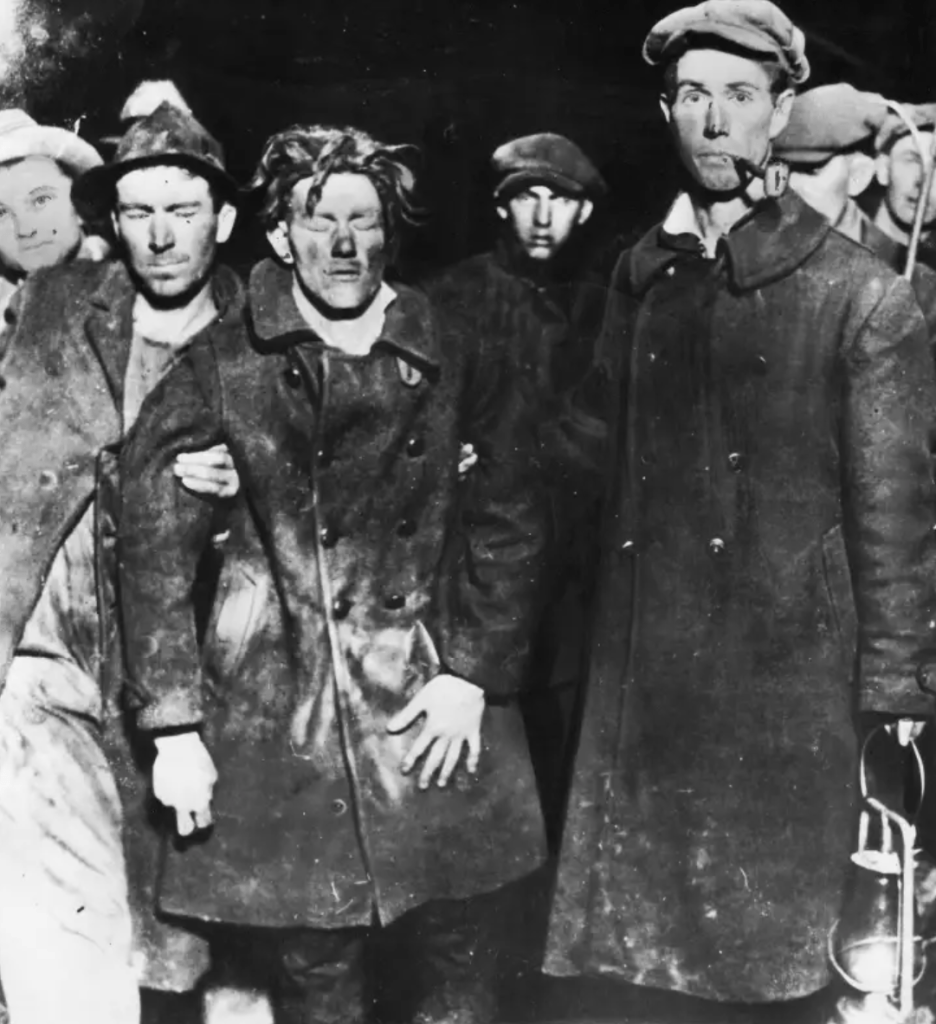
“Those who had never experienced the feeling of being in a contorted position in a tiny earthen space easily misunderstood Sand Cave’s particular rescue problems: the icy water, the mud, the tight squeezes, the twists and turns, the collapsing walls, the protruding rocks, the shifting gravel, the soggy clothes, the clammy numbness, the formidable barrier of the massive limestone block above the victim’s head, and the inaccessibility of the small rock that held his foot,” (111).

For Floyd, being trapped in such extreme conditions led to various mental states. When he was initial trapped, he screamed until is voice was gone and suffered through the pain in his hands and feet, all while losing heat and surviving without food or water. After being found and having some of his basic needs fulfilled, Floyd was calm, almost patient, while rescue efforts began. Here, he experienced the first bought of hallucinations – dreaming of angels, food, and his brother Homer. While Miller first entered the cave, Floyd was in control of all of his faculties, and almost witty. The failed harness rescue left him shaken, hysterical, and in more pain. His extremities started to numb. From here, Floyd became doubtful, upset, and incredibly frightened, finding moments of calm talking with Homer and Miller. When rescue efforts got tougher and tougher, Floyd transitioned from hopeful and encouraging to paranoid and scared, slipping in-and-out of conscious states, sobbing in terror, not wanting to be left alone. After the collapse, he started lying that he had freed himself, hoping that his rescuers wouldn’t give up.

The Kentucky Cave Wars

By the 1920s, Mammoth Cave had become a popular (and profitable) tourist attraction. It had been visited by actor Edwin Booth, brother of infamous John Wilkes Booth, as well as singer Jenny Lind and violinist Ole Bull. Their impromptu performances in various chambers of the caves nicknamed “Booth’s Amphitheatre” and “Ole Bull’s Concert Hall,” sparked even more tourist traffic.

Residents of Cave City soon realized that having control of an entrance on their land was profitable. Charging visitors to enter provided a rare source of income, as rural American farmers dealing with economic recession.

However, the competition for customers escalated. Competing farmers would purposefully place misleading signs, saying other entrances were closed or flooding, to drive the tourist traffic to where they could reap the benefits.

“Some natives estimated that by 1925 as many as a third of all visitors to the Mammoth area were diverted to the smaller, private caves by nefarious means, (37).

A sign posted during the Cave Wars

Newspaper Reporters and the Media Frenzy

In 1925, print newspaper was the main source of news for American households. Though a majority now had radios, 70% of broadcasting was music and less than <1% was news. This changed slightly toward the end of the decade as the film and television industry expanded (the first “talking picture” was released in 1927). Still, most people got their news from the daily papers.

This was the era of yellow journalism; reporters crudely exaggerated the facts and focused on whatever aspects of a story were sensational, whether or not they reflected what was actually happening. This sort of “carnivalistic” reporting style started in the summer of 1924, when the biggest news story was the case surrounding the kidnapping and murder of a 14-year-old boy by two students at the University of Chicago known as Leopold and Loeb.

However, news in early 1925 was slow. Sports was between football and baseball seasons. The biggest story that winter was the 1925 Serum Run to Nome, a five-day-long sled-dog run to reach the small town to give inhabitants a life-saving diptheria antitoxin. So, even if the Floyd Collins story appeared as a hoax, the Kentucky newspapers couldn’t help but run it.

On January 31st, the Courier-Journal was the first to report: “Cave-in Pins Man Supine in Cavern” The next day, Sunday, February 1st, Herald-Post ran the headline “Collins Free- Says Never Again,” falsifying information to edge out the reporting from the Courier-Journal. The next Monday morning brought more inaccurate, fake news-y blurbs on the Floyd Collins incident.

But, on the morning of Tuesday, February 3rd, Floyd’s story had gone nationwide. Reporters were arriving from large newspapers in major cities, all clamoring to get eye-witness information and accounts that no other paper had. Papers began spreading theories and false information about the incident for the sake of selling papers – the rock trapping his foot weighing seven tons, the various rescuers made heroes, even a theory that Floyd wasn’t trapped at all.

When Collins’ was confirmed dead, the New York Times ran an unprecedented front-page, three-column story. Later that year on May 31, 53 killed in a North Carolina explosion was on page 7; Dec 12, 61 killed in an Alabama coal mine blast was page 3.

The Collins story was so captivating that it became the third largest news story between the World Wars, behind only Charles Lindbergh’s trans-atlantic flight and the kidnapping of his infant son.

*For some more context, here’s a map for the reporters of all the newspapers mentioned in “Is That Remarkable?” (Cave City, KY is in purple; blue is 1st verse, orange is 2nd, green is 3rd)

Skeets Miller and the Louisville Courier-Journal

William Burke “Skeets” Miller was born on April 14, 1904 in Louisville, Kentucky – the nickname coming from his diminutive size, comparing him to a ‘mosquito.’ Though Miller had dreams of becoming a professional singer, he began working for the Louisville Courier-Journal (one of the four competing newspapers in the city at the time). 

The Courier-Journal had run a short story on the Floyd Collins incident, assuming it was another cave wars hoax but needing a piece during a slow news cycle. The Herald-Post paper on Sunday, February 1st ran the headline “Kentuckian Rescued from Cave”; the exaggerated story claimed that Jewell Ester (misspelling Estes’ name) had rescued Collins. The current Courier correspondent confirmed that Collins had indeed not been rescued, so Miller was sent to cover the story. 

Reaching the trapped man affected Miller emotionally – he was said to be crying when he emerged. In addition, being able to get to Floyd Collins, assist in his rescue, and provide accurate updates first-hand gave Miller the ability to write incredibly in-depth and extremely personal coverage of the story. 

On May 4, 1926, he won a Pulitzer Prize for his coverage of the Floyd Collins story. He was one of the youngest journalists ever to win, and accepted a $1000 dollar prize (around $15,000 dollars in today’s terms). He was offered $50,000 (around $730,000) to join a lecture circuit, but he refused the money and fame and opted to remain at the Courier-Journal.

Newspaper headline of Miller’s Pulitzer win

Miller never looked to continue profiting off of the fame he received from the Collins story.  He left journalism to work for an ice-cream manufacturer for a brief stint before returning to media as a broadcaster. He worked for the National Broadcasting Company (NBC) for many years, garnering the title of “the bravest man in radio” for his daring coverage, like the first live transmission from a parachute jump. He died in 1984 at the age of 79. 

The Collins Family’s History

Family patriarch Leonidas (Lee) Collins was a Baptist fundamentalist and teetotaler – meaning he abstained from drinking alcohol. He, with his first wife Martha Collins (nee Burnett), had eight children: Elizabeth (who died at three months old), James, Floyd (b. 1887), Annie, Andy Lee, Marshall, Nellie (b. 1900), and Homer (b. 1903).

Martha died of tuberculosis in 1915, and Lee remarried the widow of a Mammoth Cave guide Sarilda Jane Buckingham, known as Miss Jane by most. James died of typhoid in 1922, Annie and Andy Lee separately moved to Illinois, and Marshall married and moved onto his own farm, leaving Floyd, Nellie, and Homer at home.

The Collinses were farmers, mainly of corn and oats. They did fairly well compared to the farms around them, but income wasn’t great. They shared a small, one-floor house with a high-pitched roof. The children all attended school in the one-roomed Mammoth Cave School from July through Christmas. Many students didn’t reach the eighth grade, and often alternated between attending school and assisting with the chores at home.

The Collins’ property sat on Flint Ridge, and Floyd started exploring caves at the age of six, wandering alone in salt caves about a mile from home. Floyd only completed the fifth grade before he began working on the farm and exploring nearby caves in his free-time. He became known for his skills and was even hired by caver Edmund Turner as a local guide. Seeing professional cavers during the height of Mammoth Cave popularity boosted Floyd’s aspirations for finding commercially successful caves. “[Floyd] saved enough money by age twenty-five to buy thirty acres of his own land adjoining his father’s. Much to his delight, he discovered a small cave on it, which he called Floyd’s Cave.”

In 1916, Floyd was sure he had discovered a larger cave on the Collins’ property. Wanting to pursue it, but understanding that cave wars and money debates tore families apart – Lee didn’t support Floyd’s excursions anyway –  he had his father agree in writing that if the cave was profitable, they would split 50/50. After two weeks of hard work, Floyd reached what he called Wonder Cave, now known as Crystal Cave.

The Crystal Cave entrance made some money, but failed to be popular – it was too far away from the Mammoth Cave entrances to attract many of the dwindling tourists, with travel hindered by the Great War. In 1924, Lee moved to sell the property and, when Floyd fought him, threatened to sue Floyd. But Floyd believed that Crystal Cave was connected to the entire system, and he had a plan.

His goal, to make his own property profitable and join the ranks of famous cavers, was to find a connection between Morrison’s New Entrance to Mammoth Cave and Crystal Cave. There was a sandhole with a narrow passageway on Beesley Doyle’s farm that Floyd though would be a shortcut to solid limestone below. Floyd negotiated with Doyle and the surrounding landowners Edward Estes and Jesse Lee. Floyd’s pitch was convincing enough: they agreed to let him search their land for half of the profits and let him stay with them while he worked.

Lee was still upset by Floyd’s recklessness. Miss Jane was worried about his endeavors; Floyd had confided in her about a dream he had of being trapped and she felt as though it was a premonition. Even Homer was concerned about this particular cave. But, Floyd set out for what would be called Sand Cave on the morning of Friday, January 30th.

Rural Life and Sources of Income

After WWI, the United States became a major exporter to devastated European countries. Despite experiencing an economic recession, the average income for Americans rose. This statistic didn’t represent all American households, however. The uptick was in part upper-class manufacturers and developers profiting off of European demand. The rich were getting richer.

A rural family farm

For farmers in rural communities, average income fell by 21% by 1924. This number continued to fall through 1925. Taxes rose as the rate of foreclosures started to increase.

This demand for another source of income contributed to the desire to attract tourists with money start and the subsequent Cave Wars in Kentucky.

Tourists outside the entrance of Crystal Cave

The media circus surrounding the Floyd Collins incident allowed nearby farmers, like Bee Doyle, to profit off of the sheer number of people arriving who needed food, lodging, and warmth. The carnival nature of it all was less about rescuing this man and more about being there when it all went down.

The insular community of the Kentucky natives contributed to the “us v. them” complex when “outlanders” arrived to assist in the rescue. Money, contribution, and power were all incredibly important.