William Burke “Skeets” Miller was born on April 14, 1904 in Louisville, Kentucky – the nickname coming from his diminutive size, comparing him to a ‘mosquito.’ Though Miller had dreams of becoming a professional singer, he began working for the Louisville Courier-Journal (one of the four competing newspapers in the city at the time).
The Courier-Journal had run a short story on the Floyd Collins incident, assuming it was another cave wars hoax but needing a piece during a slow news cycle. The Herald-Post paper on Sunday, February 1st ran the headline “Kentuckian Rescued from Cave”; the exaggerated story claimed that Jewell Ester (misspelling Estes’ name) had rescued Collins. The current Courier correspondent confirmed that Collins had indeed not been rescued, so Miller was sent to cover the story.
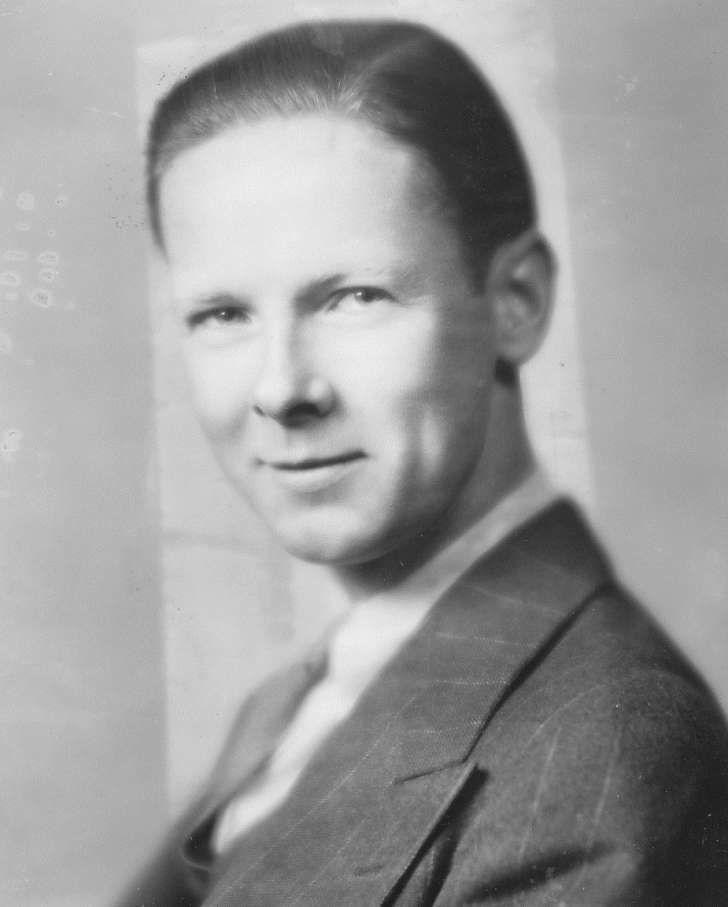

Reaching the trapped man affected Miller emotionally – he was said to be crying when he emerged. In addition, being able to get to Floyd Collins, assist in his rescue, and provide accurate updates first-hand gave Miller the ability to write incredibly in-depth and extremely personal coverage of the story.
On May 4, 1926, he won a Pulitzer Prize for his coverage of the Floyd Collins story. He was one of the youngest journalists ever to win, and accepted a $1000 dollar prize (around $15,000 dollars in today’s terms). He was offered $50,000 (around $730,000) to join a lecture circuit, but he refused the money and fame and opted to remain at the Courier-Journal.

Miller never looked to continue profiting off of the fame he received from the Collins story. He left journalism to work for an ice-cream manufacturer for a brief stint before returning to media as a broadcaster. He worked for the National Broadcasting Company (NBC) for many years, garnering the title of “the bravest man in radio” for his daring coverage, like the first live transmission from a parachute jump. He died in 1984 at the age of 79.


 Floyd Collins - University of Utah